
Oversized plants are a fun way to add lots of green to your space all at once, but it’s important to choose the right one. “If you’re looking to show off to your friends with a huge statement plant, you need to get your hands on my favorite, the monstera deliciosa,” says Griffith, because it’s easy to care for, inexpensive for its size and fast-growing. He recommends finding a “large form” monstera – which will have shorter gaps between nodes on the stem, a sign that it can reach a bigger size.
Certain types of dracaenas can also get quite tall. Plus, they’re relatively affordable and can tolerate most light conditions. If you really have your heart set on something like a fiddle-leaf fig, Griffith recommends opting for a rubber tree instead. “The rubber tree is in the same genus, the ficus,” he explains, “but is much more forgiving than the temperamental fiddle-leaf fig.”
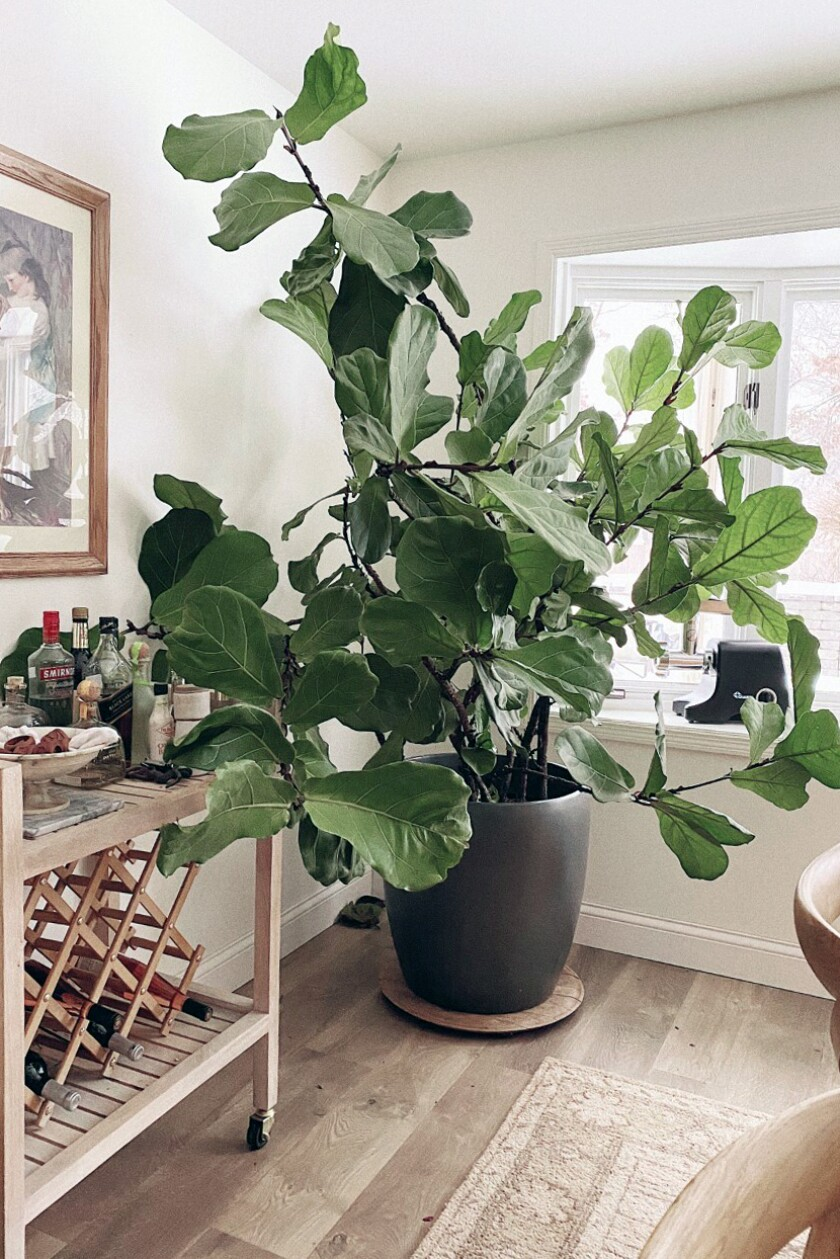
Reading this, I thought that this post needs multiple disclaimers. The disclaimers should read “Must have ample space- read over a thousand square foot of space, cathedral ceilings, floor to ceiling windows, or a home full of natural light.” “Bigger plants are heavy, and time consuming. They require TIME, as they need repotting, cleaning, plant food, and not only watering, but some love the spritz of water.” “Plants are like babies. They start off cute but grow to be wild and beautiful. Therefore think about buying small and watching your plant grow.” Please note, if you meet these requirements, you can handle a bigger plant. I speak from experience as I have an “urban indoor jungle”. I own not one but two monstera deliciosa, two fiddle-leaf figs, and two rubber trees. I have no idea why I have purchased two of each. What I do know is Monstera deliciosa loves to be spritzed and my fiddle leaf figs do not. The latter require a shower (read rolled onto the front porch and hose down)every season to remove the dust from their leaves, leaving me to hand dry EVERY leaf as the leaves cannot remain wet. Then they need food and soil, each requiring something different. There are always surprises like repotting, new growth, and water changes. If you still want to buy a statement plant, you have been warned.
 Real Life of an MSW